Method
The cucumber makes its own brine.
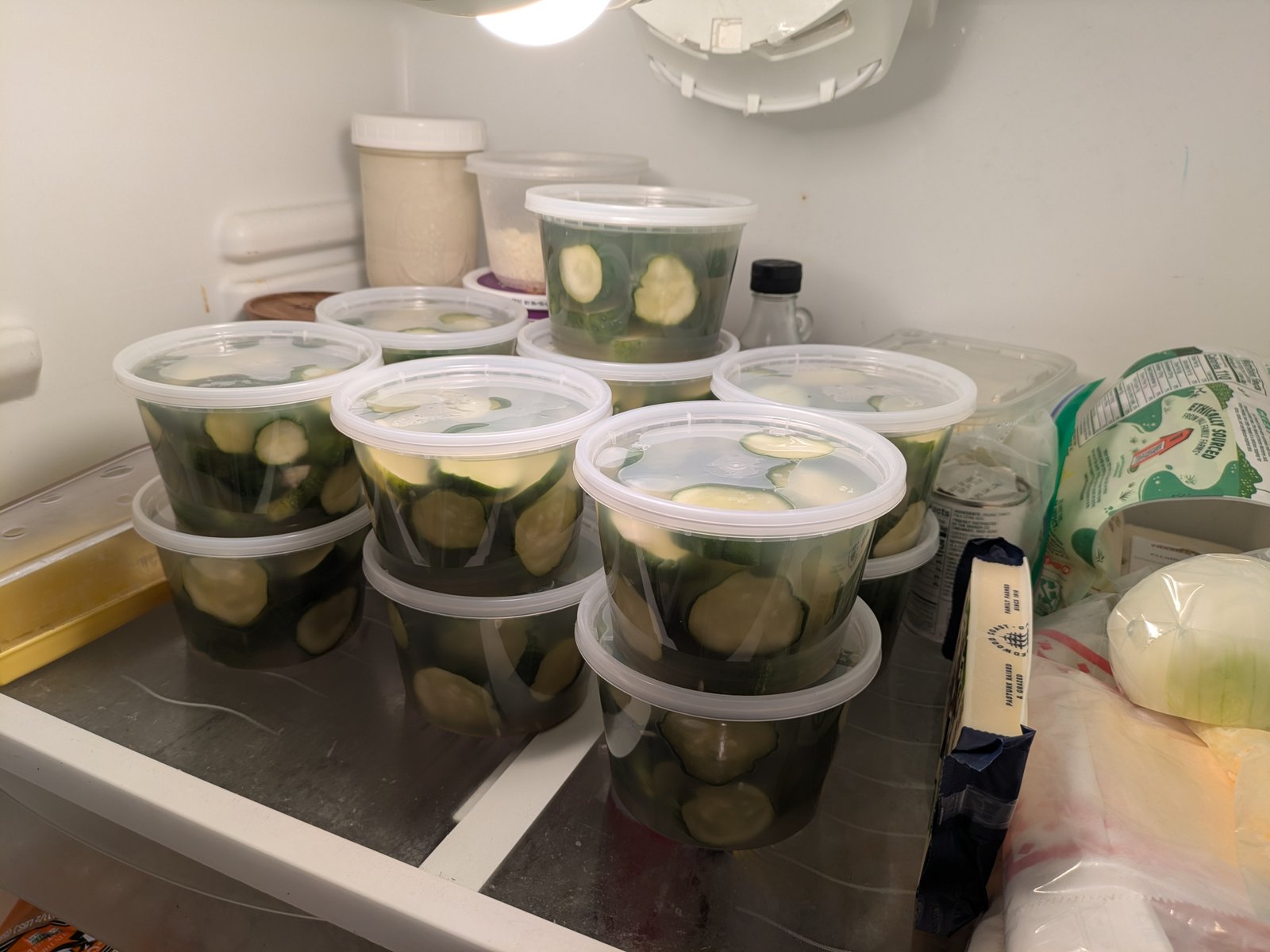
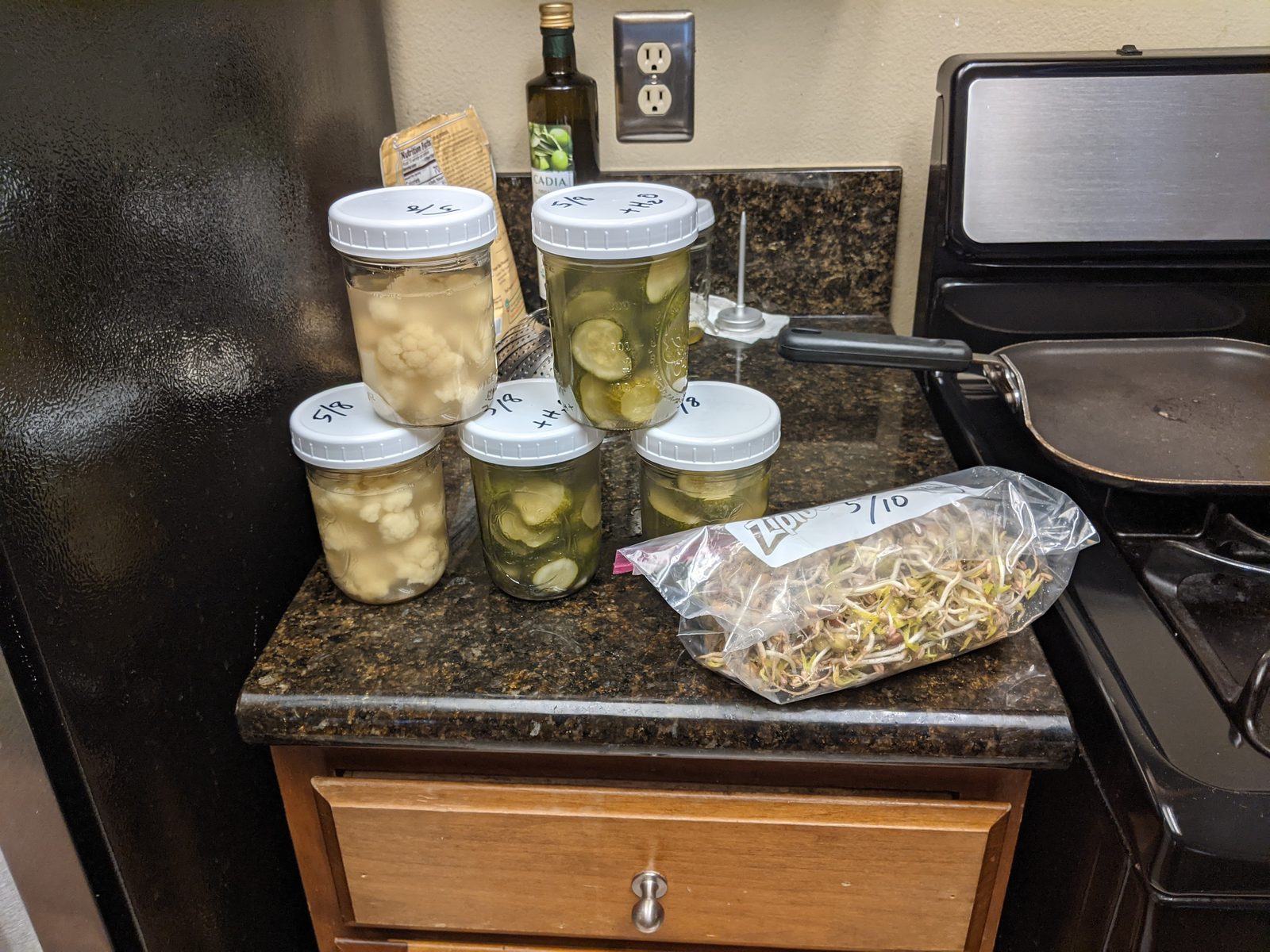
No vinegar. No starter culture. The brine below the cap is cucumber juice, nothing else; only clean, filtered water goes into the cap brine on top. Salt pulls the liquid out of the cucumber, and the bacteria already living on the vegetable do the rest. What we add is not a secret ingredient. It is control and intent.
Four ingredients, each with a job
Most pickles you can buy are cucumbers sitting in flavored vinegar. Ours are not. Nothing in the jar is there for looks. All four are doing a job.
-
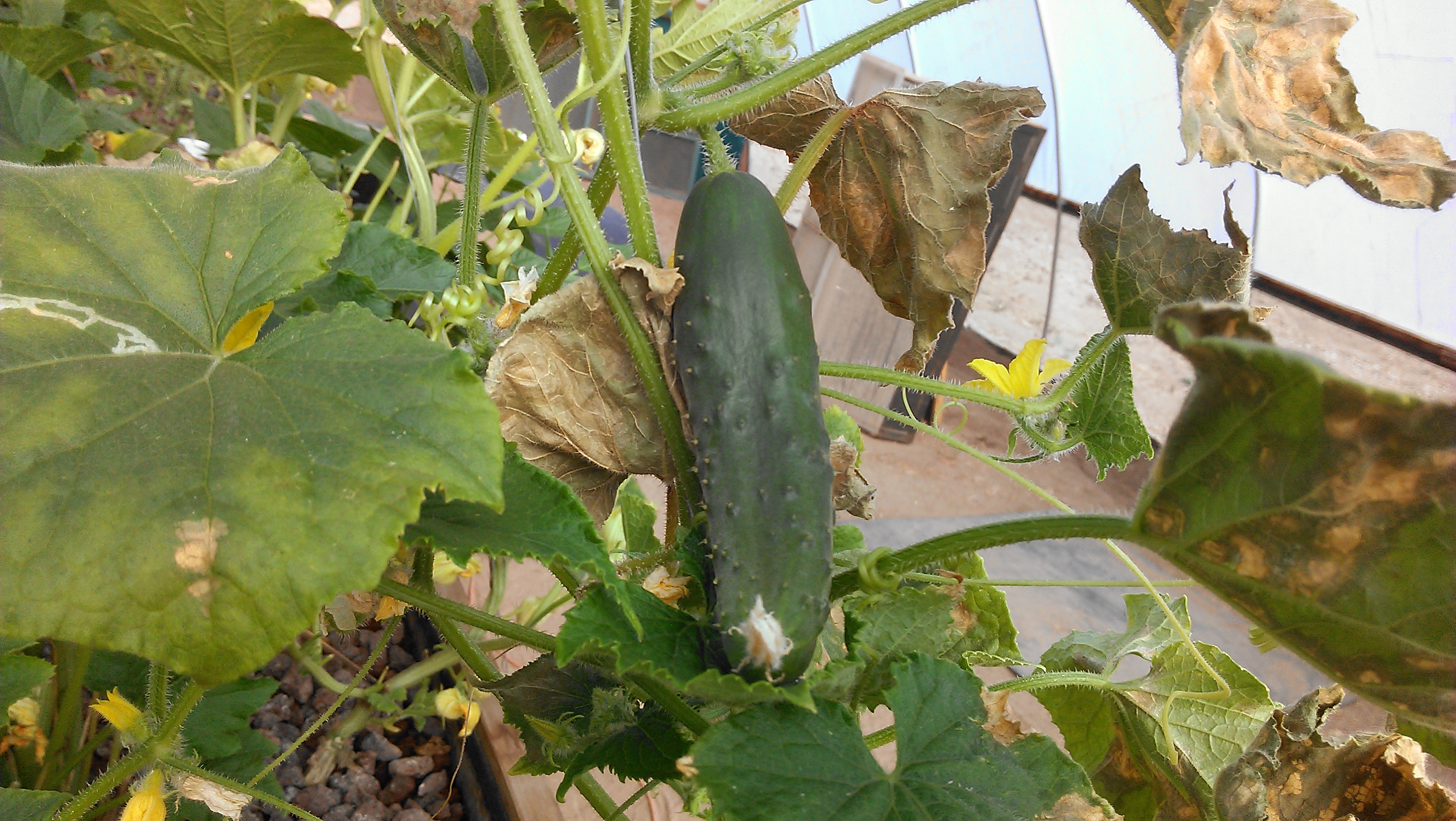
Cucumbers
They are both the product and most of the liquid. The brine below the cap is cucumber juice that the salt pulled out; only the cap brine on top is clean, filtered water.
-
Sea salt
This is the part that keeps it safe. We use Redmond Real Salt, unrefined and mined from an ancient sea deposit in Utah, not a factory-made pickling salt. It pulls the brine out, holds back the microbes that would spoil it, and gives the lactic acid bacteria the head start they need to take over and sour the batch.
-
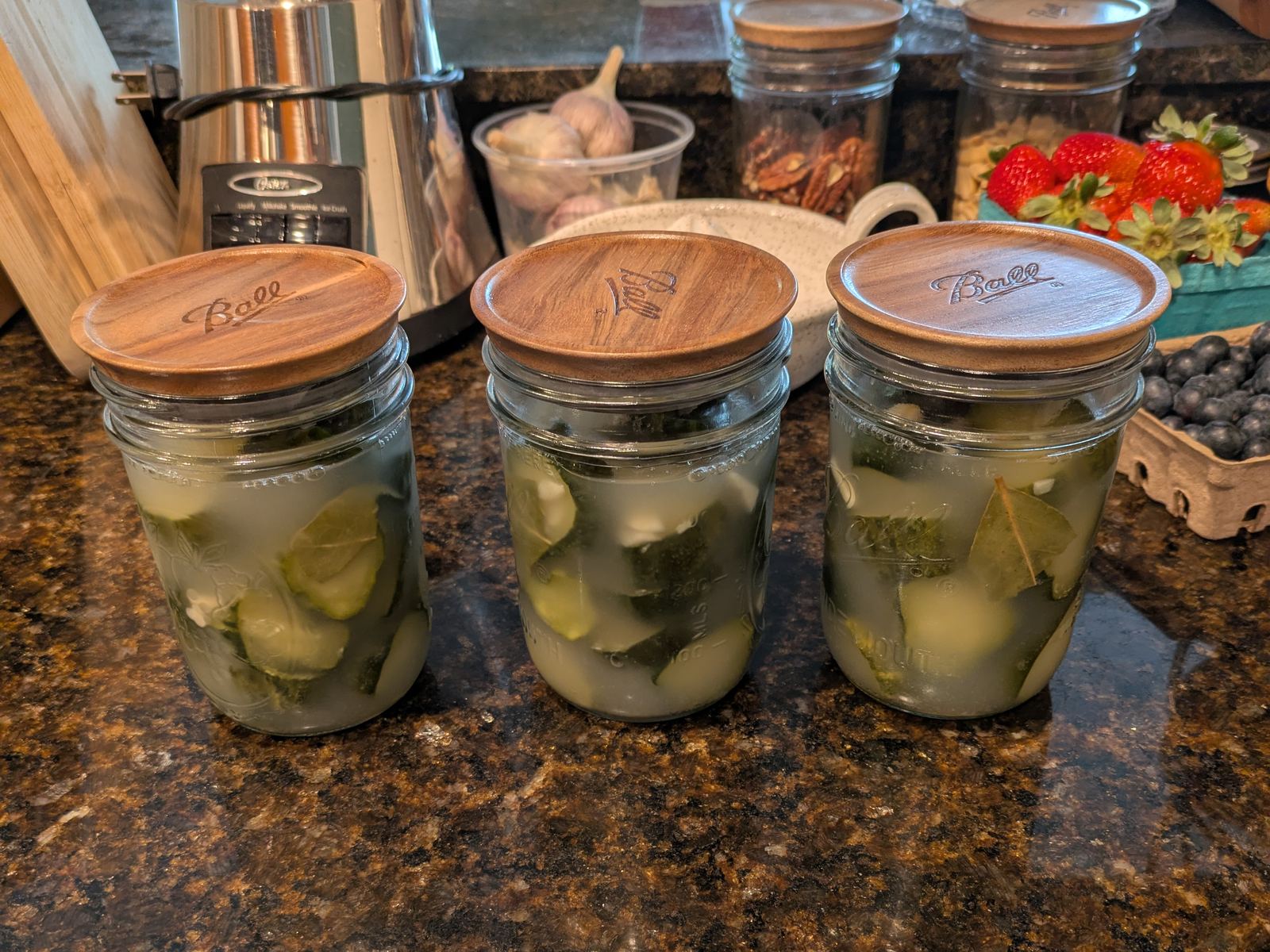
Garlic
Flavor, and a little help holding off the microbes we do not want.
-
Bay leaf
Flavor, plus tannins that help the finished chip keep its snap.
It has to be salt and nothing else. Iodine and anti-caking agents both get in the way of the ferment, so neither one comes near it. Redmond's salt is unrefined and additive-free, which clears that bar even though it is never sold as "pickling salt." That one is a rule, not a preference.
What we let ourselves change, and what we do not
We write the batch down before we start it, and half of what we write is not up for debate once the day arrives. The interesting question is not which numbers we picked. It is which ones we allow ourselves to move.
Fixed, no argument
- How much salt, measured against the cucumbers' weight
- How strong the cap brine is
- The temperature range it ferments in
- The pH it has to get under, and the acidity it has to reach
Ours to move, by taste
- Garlic
- Bay leaf
- How sour we take it before pulling it
- How we cut it and how we pack it
We weigh the salt against the cucumbers after washing and trimming them, so the ratio matches what actually goes into the crock, not what we started with. The proportions themselves stay with us. What we will say out loud: it is written down, weighed instead of guessed at, and the same on the hundredth batch as on the first.
How a batch actually goes
-
1
Prep
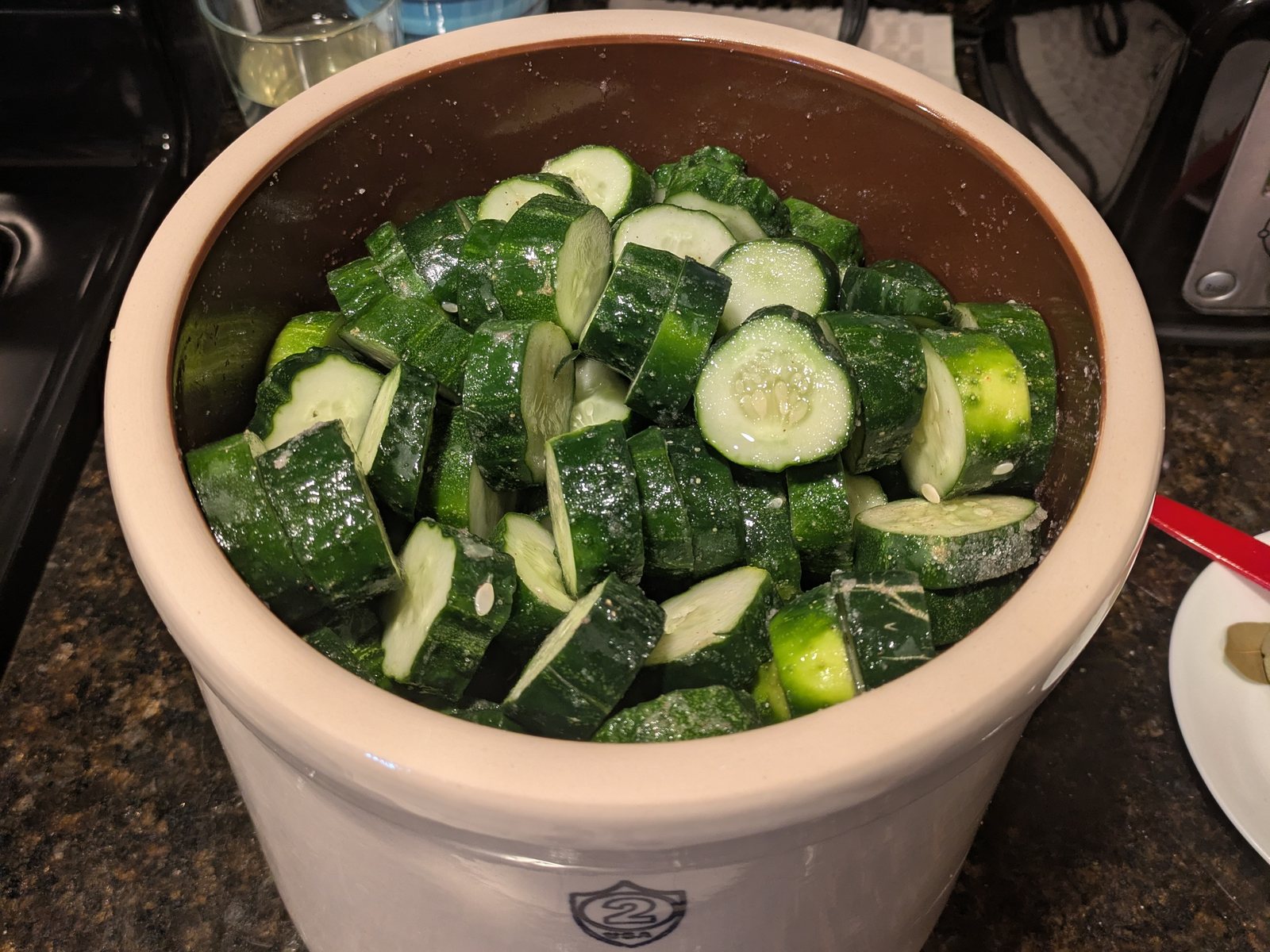
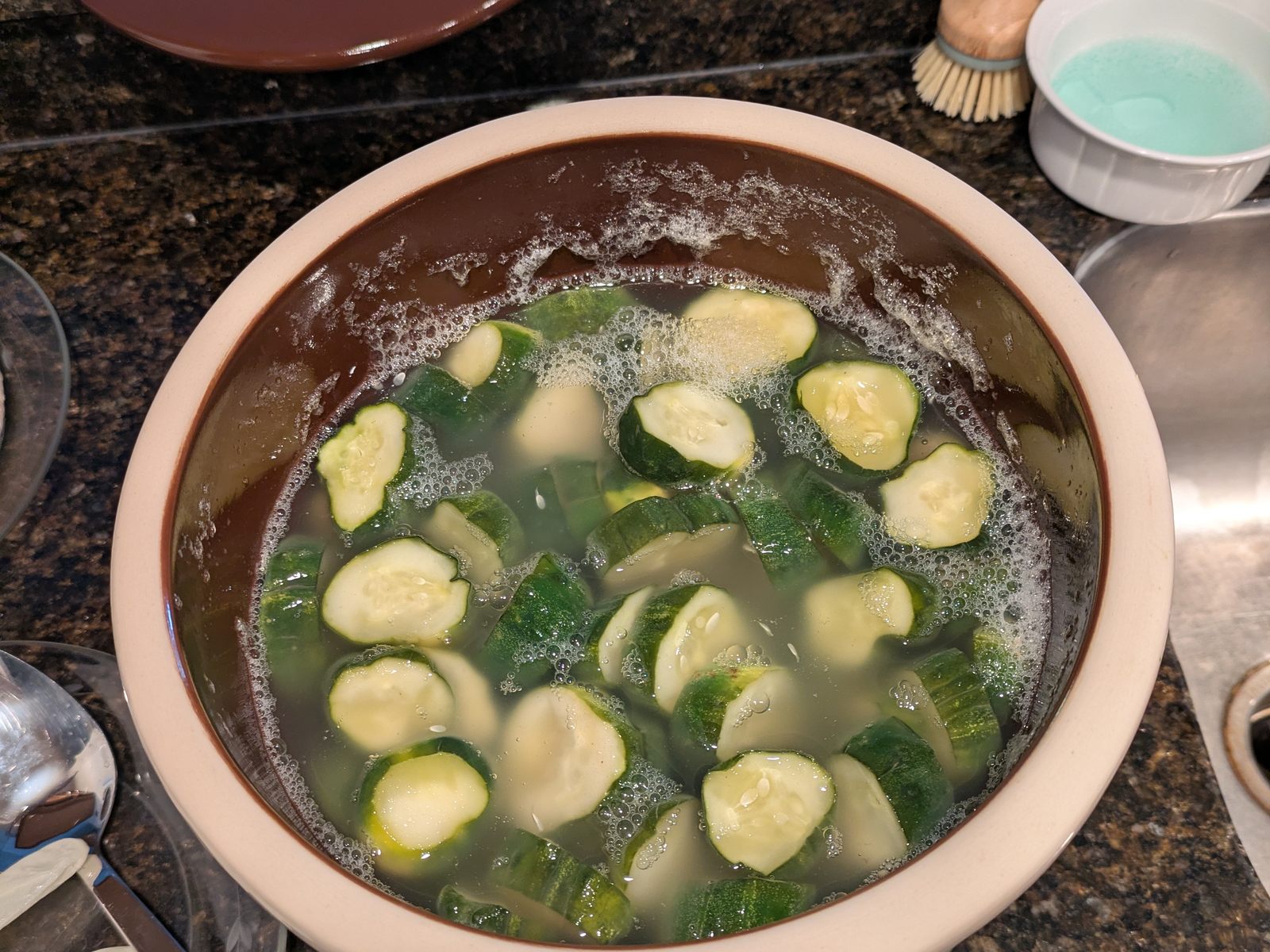
We scrub the cucumbers, cut them into chips, then weigh them. Both ends go in the bin, and the blossom end is not negotiable: it carries enzymes that turn the finished pickle soft, and once they have done that there is no getting the texture back. The garlic gets peeled and lightly smashed.
-
2
Draw the brine
Cucumbers, salt, garlic and bay all go into the crock together, and we mix until the salt is spread evenly through it. Then it sits, and we turn it on a schedule to keep the liquid moving. This part does not end on a clock. It ends when enough brine has come out of the cucumbers to cover them once they are packed, and not a moment earlier.
-
3
Pack and cap
We pack the chips in firmly, in tidy layers, nested so hardly any air gets trapped. The bay goes in as the layers build, not scattered over the top at the end. Weights hold everything under the surface, and a salted cap brine goes over the weights to seal it. The lid sits loose, so the ferment can breathe out without much getting in.
-
4
Cellar and watch
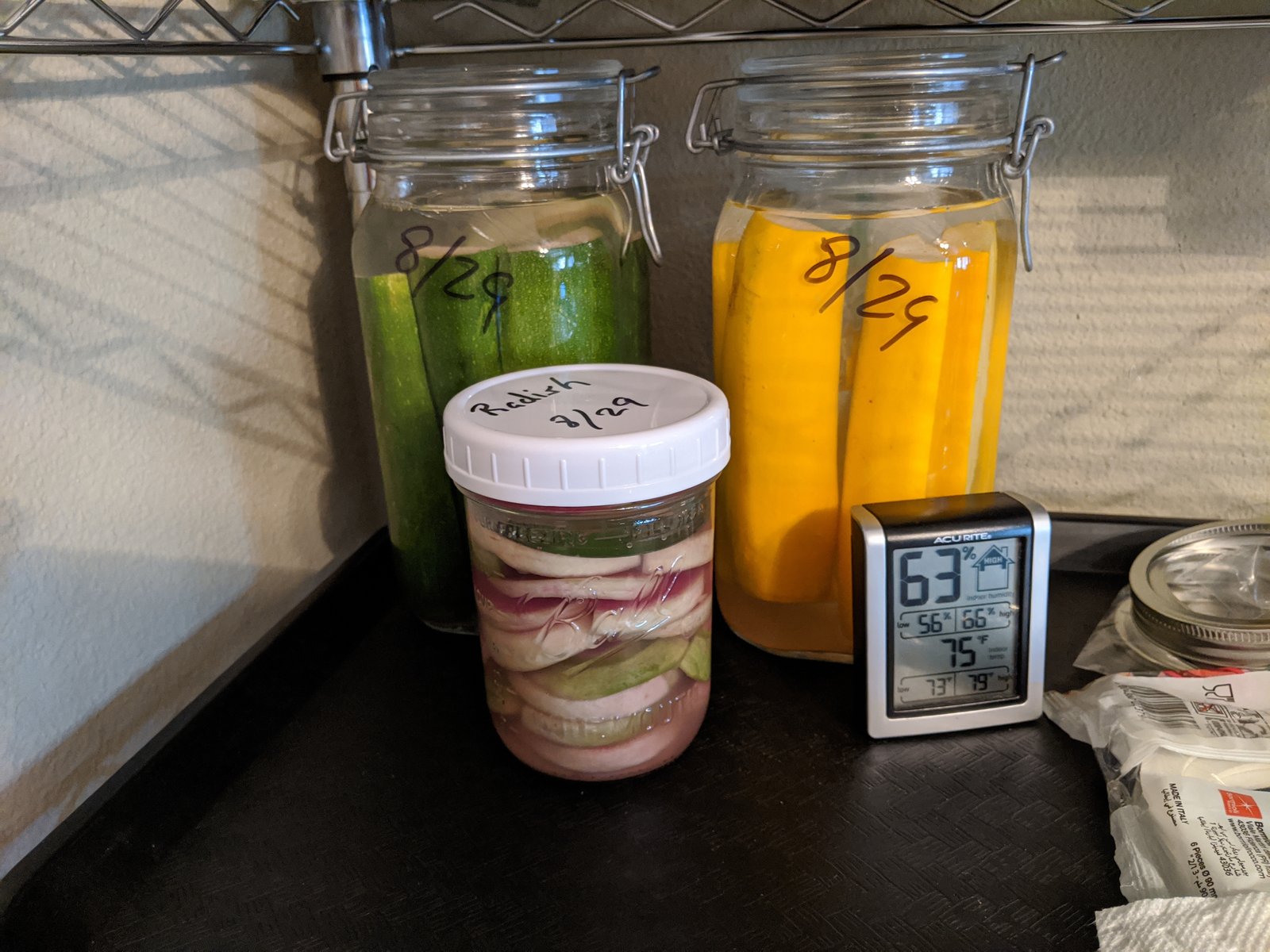
It goes into the cellar and stays in the temperature range we set for it. We check it twice a day, morning and evening, every day, weekends included and no matter how inconvenient it is, reading temperature and pH each time.
-
5
Taste, then pull
We start tasting partway through and keep tasting until it is right. When the pH comes down into range, we know we are close. A batch comes out when the taste and the sourness are where we want them, not when a timer goes off, and we keep pushing the pH below the safety line anyway: the lower it goes, the safer the batch and the longer it keeps. The brine reads differently coming out than it did going in. That is expected, and it is one of the things we write down.
What gets written down
Twice a day, every check writes down the same four things. One reading on its own tells you almost nothing. What matters is the shape of the whole curve, across this batch and every batch before it.
- Cellar tempthe room the crock is sitting in
- Brine tempin the liquid, not the room
- pHhow sour it has gone, and how fast. This is the safety number
- What we sawsmell, surface, color, how lively it is
One reading happens only once, not twice a day: conductivity, checked right after mixing, to confirm the salt actually dissolved into the brine instead of just going in by weight.
The readings themselves stay with us. We packed batch 001 on 13 June 2026 and logged it twice a day against a four-day limit.
The lines that end a batch
We write these down before a batch starts, because the timing is the whole point. A number decided in advance holds. The same number reconsidered on day four, by someone who has watched that crock all week and wants it to be fine, does not hold. That is negotiating, not measuring.
The ferment has to pull the brine below pH 4.6 while it is still working. We did not come up with that number, and we take no credit for it. It is the published line for keeping this kind of food free of the bugs that make people sick, and it is the most important thing that happens in the crock.
We check conductivity right after mixing, before anything goes into the crock to ferment. If it comes in under our floor, that batch of cucumbers never starts: we fix the salt math and mix again. Salt is never a surprise days into a ferment.
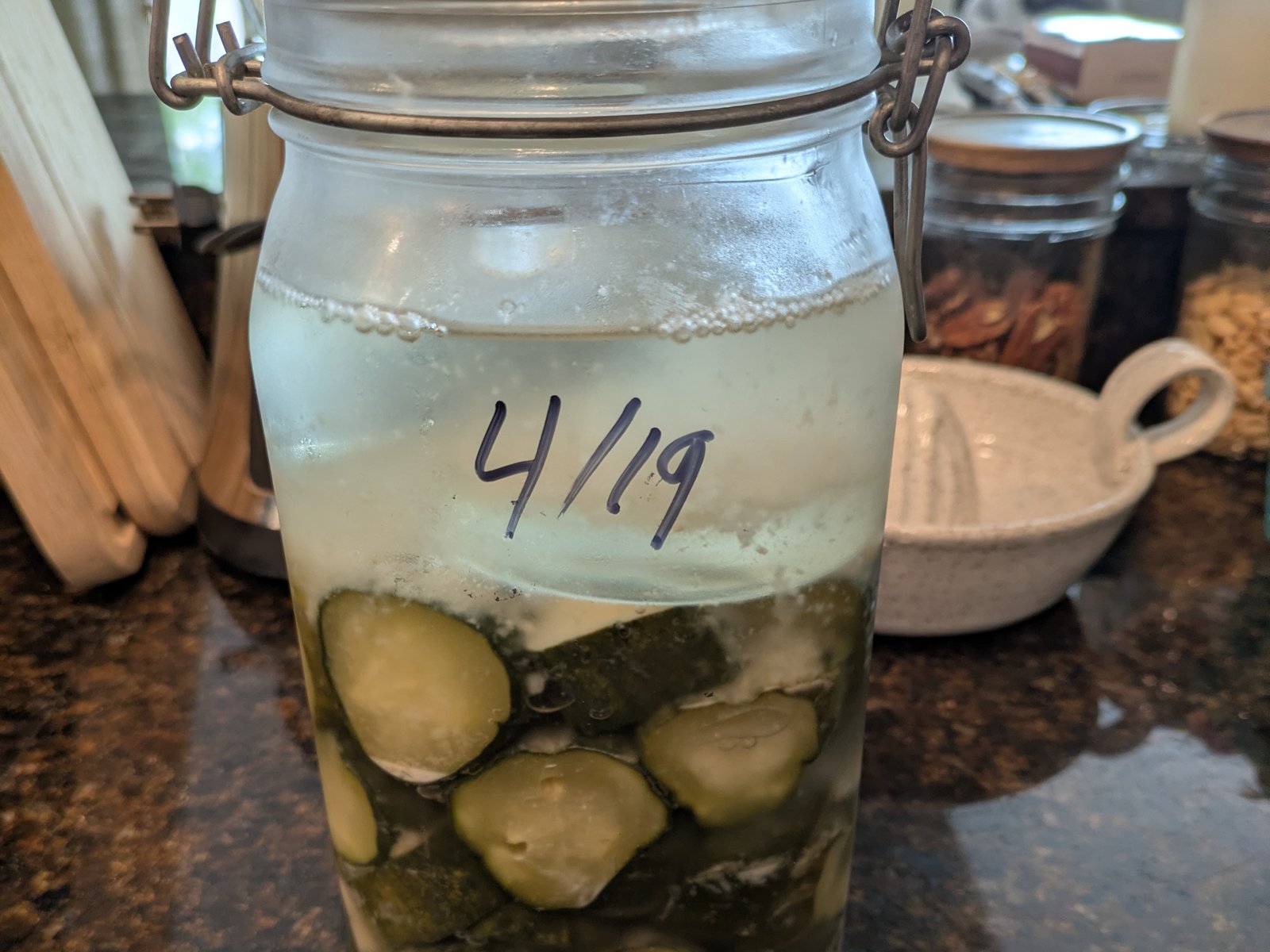
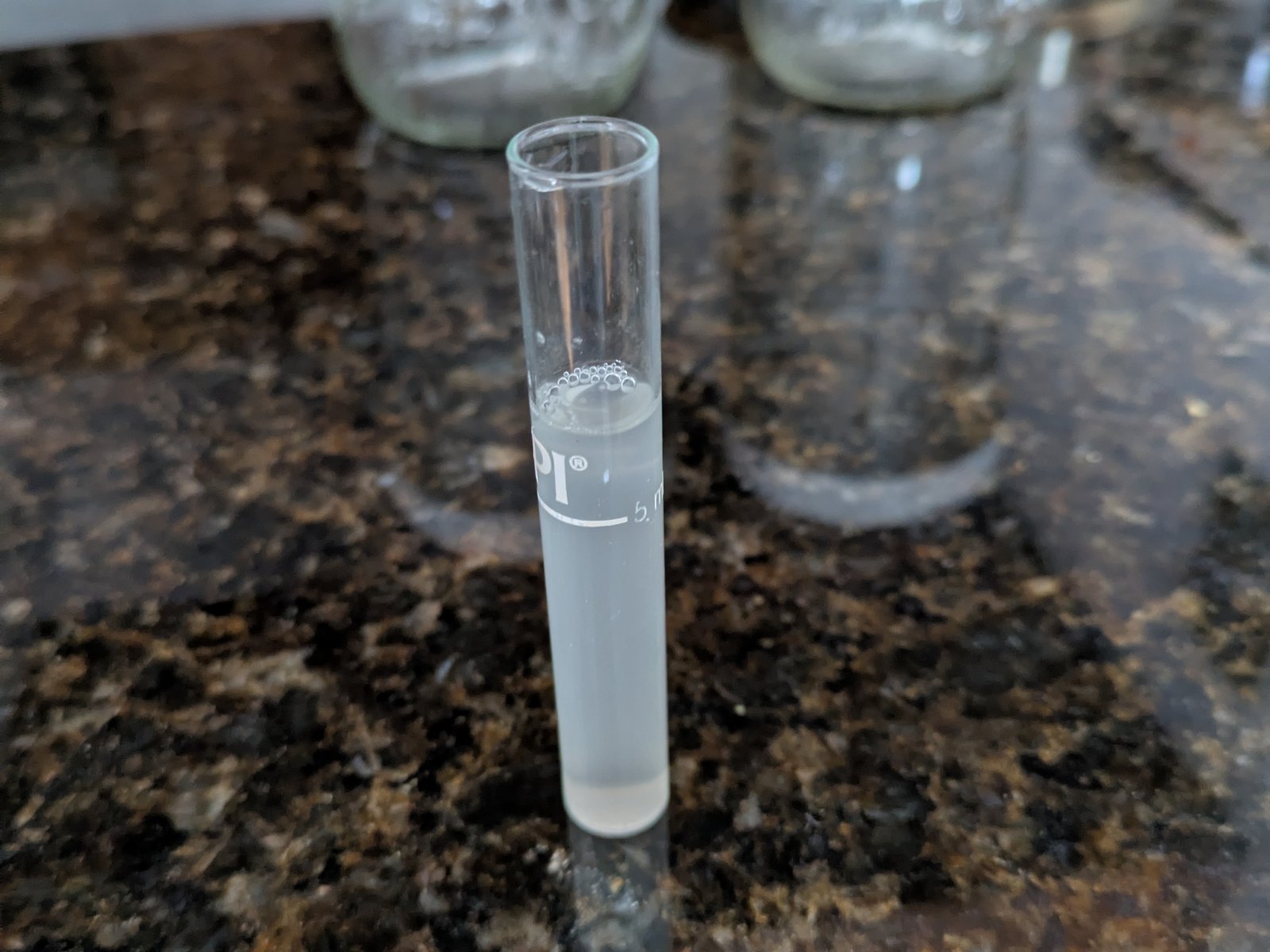
The cloudiness is the lactic acid bacteria themselves, multiplying fast. The foam is carbon dioxide, a normal byproduct in the first few days. Both mean the ferment is active and winning, not in trouble.
Throwing out a batch costs us a crock of cucumbers. There is no version of this business where that is the expensive mistake.
After the pull
We pack the chips with enough brine to cover them, and every container gets its batch number and pack date written on it. Every batch keeps its own record: the weights that went in, the full log of readings, what we saw, and the day we pulled it.
If anyone ever asks a question about a jar, we want to answer it out of a record, not out of memory.